It started with noticing something obvious.
In 2020, millions of people started working from home. Most of them did it in spaces that were never designed for eight-hour workdays. Kitchen tables became executive suites. Guest bedrooms became conference rooms. Living room corners became where serious decisions got made.
The spaces worked. Sort of. People adapted. But adaptation isn't the same as function. When you work in a space that wasn't designed for work, you carry a constant low-grade friction. You spend mental energy managing your environment instead of your work.
We noticed this in conversations. People talked about how hard it was to focus at home. How they'd spend the first twenty minutes of each day just clearing enough space to open their laptop. How they couldn't fully decompress after work because the desk was still there, still visible, still asking for attention.
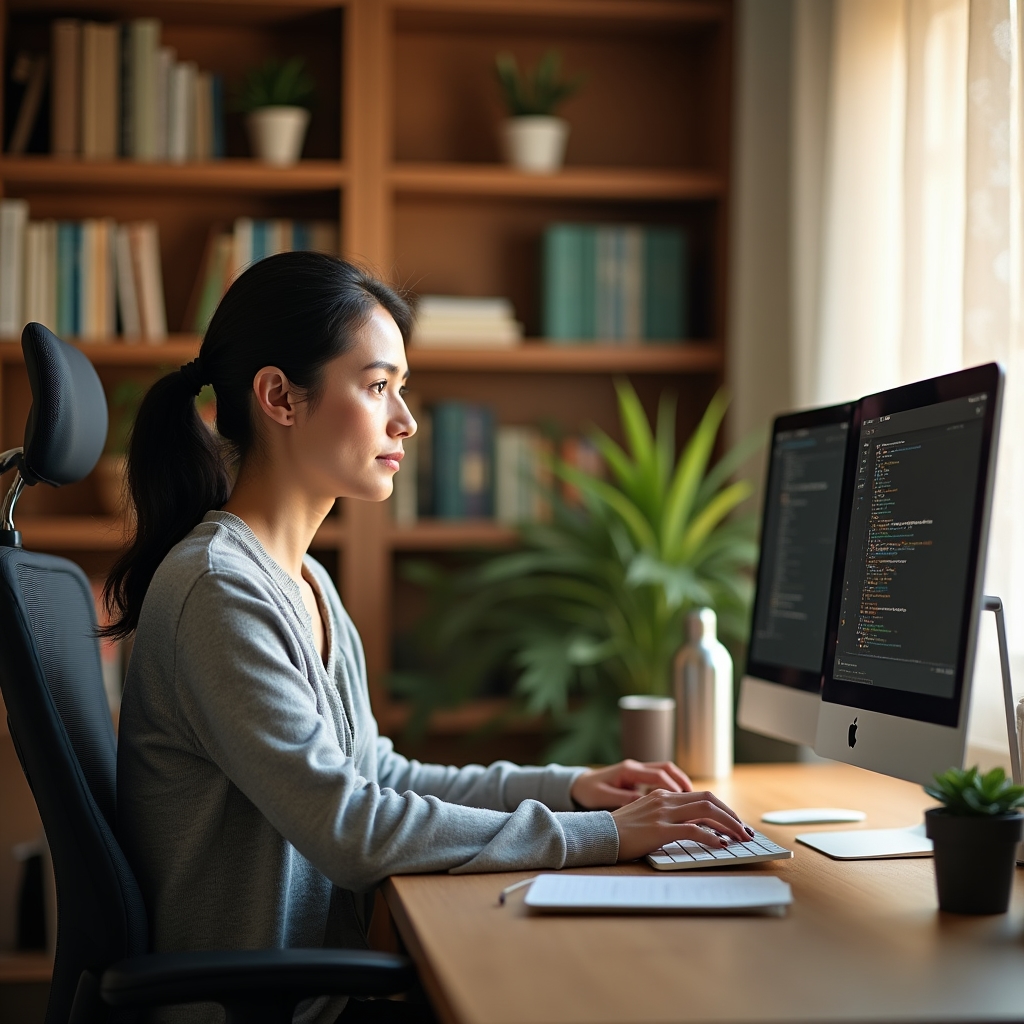
Professional organizing already existed. Home office organizing didn't.
There were plenty of people who could help you organize a kitchen or a closet. The methods were established. The market was well-served. But home offices occupy a different category. They're functional spaces with specific technical requirements. Cable management, monitor placement, lighting angles, acoustic considerations. They need an organizer who understands how knowledge work actually happens.
We saw an opportunity to build something specific. Not general home organizing. Not generic productivity coaching. A service that physically transforms a home workspace with the needs of a remote worker at the center of every decision.
That meant developing a process. An assessment that captures how someone actually works, not just what their space looks like. A planning phase that considers work type, equipment, daily rhythms. An implementation session that produces a real result in a single day. And follow-up to make sure the result holds.
Observation first
We look at how the space is actually used before suggesting any changes. Real behavior, not ideal behavior, drives the plan.
Function over aesthetics
A well-organized office might also look nice. But looking nice is never the goal. Supporting focused work is the goal.
Systems that hold
Organization that requires constant maintenance isn't organization. We build systems that stay functional with normal daily use.
Your space, your rules
You work in this space. Your input shapes every recommendation. We don't impose a system; we build one that fits how you think and work.
Denver was the right place to start.
Denver has a large and growing population of remote workers and independent professionals. The city draws people who take their work seriously and invest in the tools and environments that support it. It felt like the right community to build something specific and useful for.
We're based downtown, on Curtis Street. We work across the metro area and parts of the Front Range. If you're outside our usual area and think this service makes sense for your situation, reach out and we'll talk through options.